✦ Offshore, Shore and Rock Fishing
São Tomé
Fishing Guide
Volcanic slopes drop straight into deep water. Blue marlin, yellowfin tuna, wahoo, and grouper are all reachable, whether from a local boat or from the rocks.
✦ Target Species
What Fish Can You Catch in São Tomé?
The fishing here is not polished, but it is real. Volcanic slopes drop quickly into deep water, bringing gamefish close enough for small wooden boats. There are no marinas, charter fleets, or tackle shops, just working boats and raw access. Everything here comes from direct experience, so you know what to expect before you arrive.
✦ Arranging Trips
How to Arrange a São Tomé Fishing Trip
To go fishing in São Tomé, you need to plan ahead. Boats are limited, space is tight, and most trips take place on open fibreglass boats also used for island runs and dolphin trips. Setups are basic: no rod holders, no VHF, no fish finders. This is not a packaged charter scene. You are stepping into a working system, and that is exactly what makes it worth doing.
We work with trusted local skippers and can help arrange a proper day on the water for tuna, wahoo, or dorado when conditions line up. Trips depend on tide, swell, fuel, and availability, so you need to stay flexible, bring your own gear, and book early.
✦ Offshore Fishing
How Offshore Fishing Works
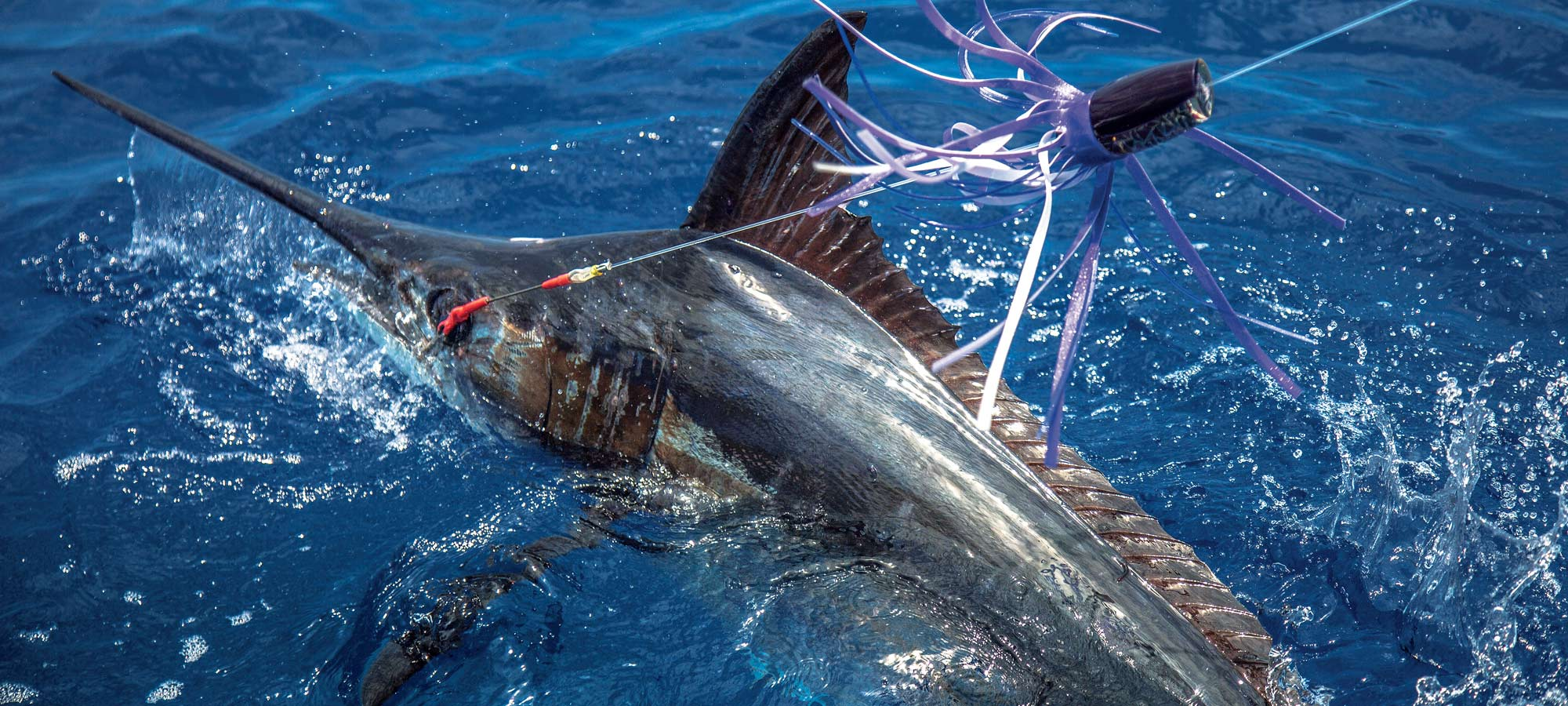
Deep water begins close to shore in São Tomé. Volcanic slopes fall steeply into the Gulf of Guinea, bringing yellowfin tuna, wahoo, and Atlantic blue marlin within reach of small boats launched from village beaches.
Offshore fishing runs on local rhythm, with no fixed schedules, no booking platforms, and no traditional charters. The blue marlin season peaks from July to September, when fish move along the offshore drop-offs. Be aware: this coincides with the Gravana dry season, when trade winds strengthen and the sea often turns choppy.
There are no multi-million-dollar sportfishing boats here. You will be fishing with local fishermen in a small open boat. You will get wet, and you need reasonable sea legs. This is not a cruise. It is sport.
✦ Shore Fishing
Lure Fishing from the Rocks
Boca do Inferno
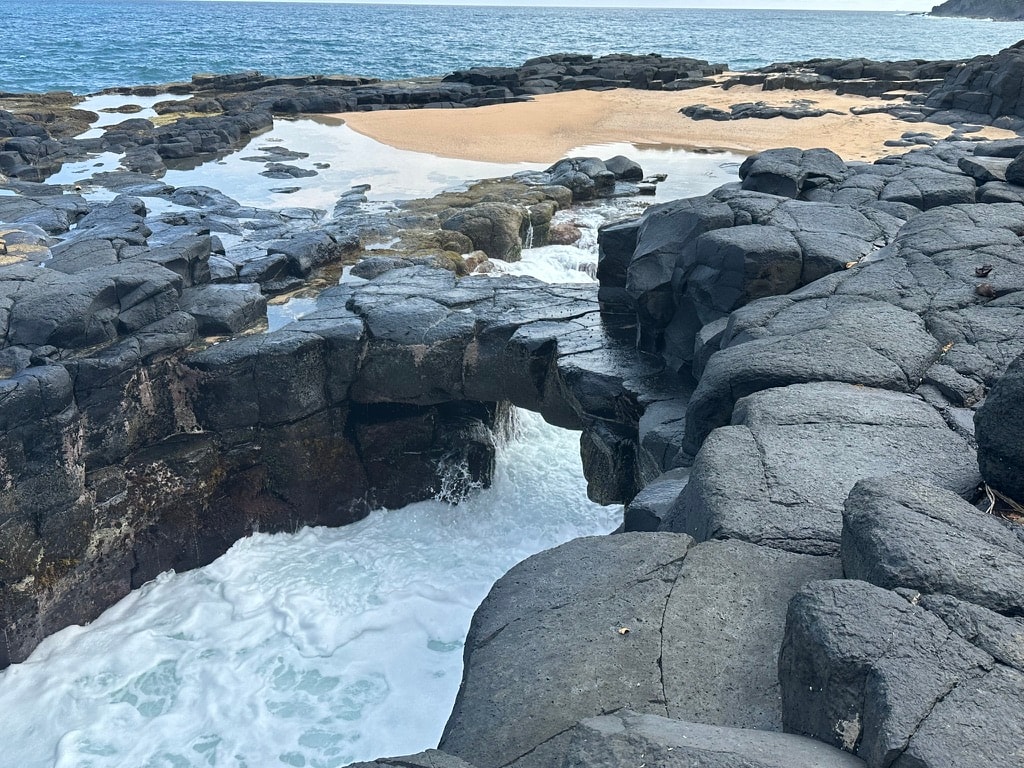
The volcanic coastline of São Tomé forms steep headlands where deep water meets black basalt, giving shore anglers access to serious water close in. One of the best-known access points is Boca do Inferno. The car park is about 500m from the main road. There is a bar on the right as you turn in with clear views over the ground you will be fishing. It is safe to park near the souvenir stand where you can buy fresh coconut juice. The path down to the water is directly in front and involves a tricky scramble over fairly stable rocks.
Be extremely careful here. The danger is not just the crash of the wave, but the drag. Volcanic shelves often have underwater caverns that create a powerful vacuum effect as the water recedes. If you fall in near a blowhole like Boca do Inferno, the suction can make self-rescue impossible even for strong swimmers. Stay back from the dry line, and even then be careful. The waves can be sudden and larger than you expect.
Lure fishing here means working untouched ground. Most fish have never seen a Rapala or popper. Spinning from the rocks produces grouper, barracuda, small tuna, and surprise hits from passing predators. Early morning and late afternoon offer the best action, but bites can come at any time during daylight.
Praia dos Governadores
A great spot for fun. You will need a 4x4 to reach it, but the reef to the right of the beach holds predatory grouper that will hammer your lures. Fish over a rising tide as you are likely to lose tackle. You can also reach it on foot from Micoló, but it is a hot walk with no local facilities once you leave the village, so pack water if you are planning this trip.
One thing to be aware of: you will be quickly surrounded by local kids who will attempt to help by removing fish from your lures. They seem to have no concept of the second treble hanging off the back of the hook. They will also offer to retrieve your lure if you get it lodged in the rocks, which is likely. Please be aware of their safety. Any fish you catch, the kids will ask for. Size limits mean nothing when there is a meal on the hook.
✦ Tackle and Gear
What Tackle to Bring
Nothing is replaceable locally. Bring everything you need and backups of anything that might fail. The nearest tackle shop is in Europe. If you want to target specific species, the following patterns work well.
Grouper
Respond to jigs and metal spoons fished close to the bottom. A slow lift and drop produces bites from fish holding tight to volcanic structure. Bright colours such as gold, orange, or red help in deeper water.
Barracuda
Prefer fast-moving lures. Long metal spoons and slim poppers in silver, blue, or green are effective. Always use a wire trace. They will cut through fluorocarbon.
Small Tuna and Bonito
Take small hardbaits, diving minnows, or 20 to 40g metal lures cast far and retrieved quickly. Natural colours such as blue or silver match flying fish, the main forage.
Trevally and Jacks
Will hit medium to large poppers in white, blue, and chartreuse. Work them along drop-offs, reef edges, and areas with white water.
Detailed Gear Guide: Offshore
For offshore angling, you need heavy conventional setups. A 50 to 80lb class rod with a quality reel holding 600 plus yards of capacity handles marlin and large tuna. Use the heavier end of that 80lb range. The volcanic shelf here is sharp and drops off instantly. If a large fish sounds deep and rubs the line against the drop-off, lighter braids will be cut immediately.
Bring a medium conventional setup as well, 30 to 50lb class for tuna, wahoo, and smaller billfish. Pack a spare reel or a complete backup rod and reel combination.
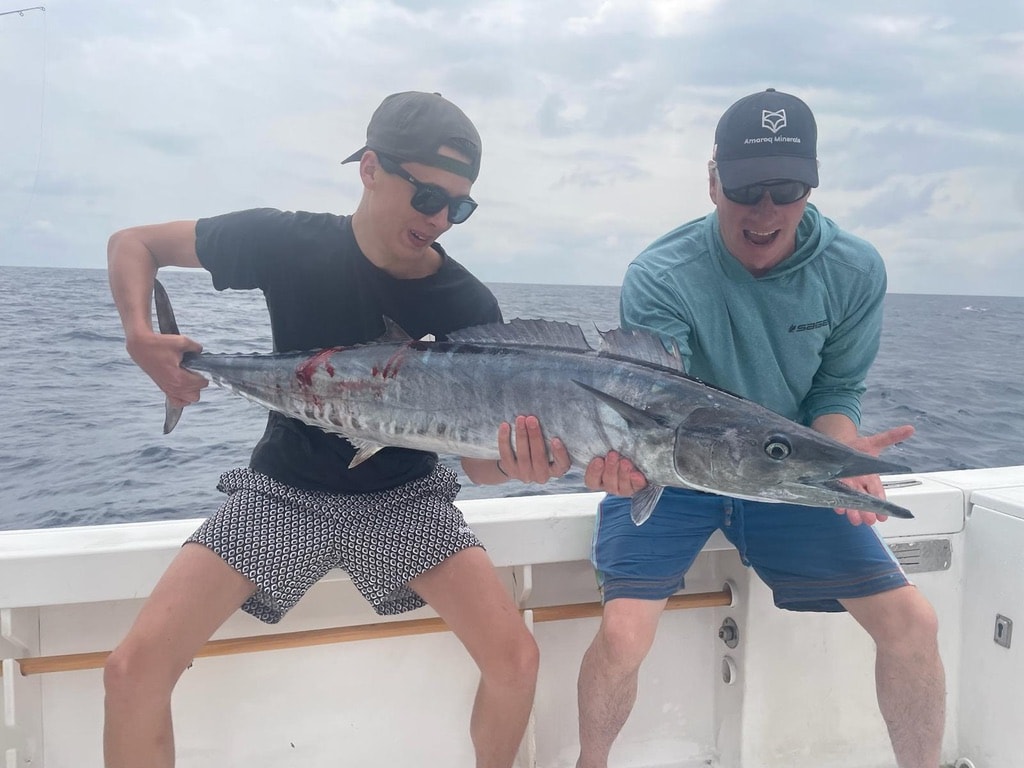
Line and leader requirements: 50 to 80lb monofilament or braid as main line, 80 to 130lb fluorocarbon leaders in 7 to 10 foot lengths, and 200 to 400lb wind-on leaders for billfish. Wahoo demand wire leaders, either 30 to 60lb single strand or multi strand cable. Do not skip the wire for wahoo. The wahoo here are aggressive and often strike the head of the lure rather than the tail. If you run straight fluorocarbon, their teeth will snip you off before the drag even engages.
For trolling lures: skirted lures 6 to 10 inches in various colours. The primary forage here is flying fish, so lures in blue, silver, and white patterns often outperform others. Heavy duty swivels rated 100 to 200lb are essential. Pack crimps, a crimping tool, and wire for constructing leaders.
Use poppers in the 60 to 120g range for topwater action. Carry at least three types: small for calm water, mid-size for general use, and heavier for rough conditions. Stickbaits also work, especially over clean volcanic edges. Bring both floating and sinking versions.
Detailed Gear Guide: Shore Fishing
A medium heavy spinning rod measuring 7 to 9 feet in 15 to 30lb class paired with a quality saltwater spinning reel in 4000 to 6000 size with sealed drag handles most situations. Bring a backup rod or spare reel spool.
Lures: Rapalas in 3 to 6 inch sizes in both natural and bright colours. Poppers work for surface action along edges and drop-offs. Casting spoons in silver and gold weighing 1 to 3 ounces cover different conditions. Metal jigs handle vertical presentations when targeting depth.
Supporting gear that matters: heavy duty saltwater fishing pliers, line cutters, fishing gloves, and a quality knife. Protection from equatorial sun is critical. Polarised sunglasses, reef-safe SPF 50 sunscreen, and long sleeve UPF-rated fishing shirts for all day coverage.
Backup and repair: spare line spools, extra lures double your initial estimate (rocky bottoms and toothy fish consume tackle quickly), reel oil, duct tape, and zip ties for field repairs.
Airlines permit fishing equipment as checked baggage with potential excess fees. Use hard sided rod tubes or PVC pipe to protect rods. If transiting through Luanda or Accra, be aware: some friends have lost rods on that leg.
Do I Need a Fishing Licence?
Fishing here does not require a tourist fishing licence. You can fish from shore freely with no permits, inspections, or local restrictions for individual anglers spinning or bait fishing along the coast. In practice, there is no enforcement against shore angling. Locals are more likely to be curious or glad of the catch than concerned about rules.
Rivers are a different matter. As you drive south, you will pass the bridge with a great view of Pico Cão Grande. The river below is inviting, but there is a fishing ban there. There is a clear sign on the bridge. There is great fishing further down, so please support the environmental work being done here. Look, dream, but do not cast.
Catch and release is encouraged for billfish including blue marlin and sailfish. The island is working to balance access with marine biodiversity protection as part of its UNESCO Biosphere Reserve status.
Is the Fishing Safe?
Safety requires realistic expectations about local conditions. Offshore trips operate from basic wooden pirogues and small fibreglass boats that lack modern safety equipment. Life jackets, VHF radios, GPS units, and first aid kits are not guaranteed on local boats. If you have a self-inflating life jacket, bring it.
The Gulf of Guinea presents typical offshore hazards: changeable weather, strong currents, and open ocean conditions. Local crews work these waters daily and know the seasonal patterns, but vessels are rudimentary. Engine reliability varies, and mechanical failures offshore are not uncommon.
World Bank WACA programme initiatives have equipped approximately 3,000 fishers with GPS units and safety kits since 2019. Renovated lighthouses now provide better coastal navigation. These measures have improved safety at sea, though risks remain inherent to artisanal operations.
How Much Does a Trip Cost?
Half day offshore excursions (4 to 5 hours) generally cost €80 to €150 with local crews. Full day trips run €150 to €250 depending on distance and fuel. Pricing is negotiated directly with fishermen rather than through fixed charter rates.
Pay in local currency where possible. Crews will accept Euros, but they almost never carry Euro change, especially down south. If you hand over a €50 note for a €30 share, do not expect €20 back. Bring small notes or pay in Dobras.
What is included: boat usage, crew, and fuel for the agreed distance. What is not included: tackle and equipment (bring your own), food and beverages, crew tips, and transportation to departure points. Some arrangements require advance fuel payment or deposits.
Shore fishing requires no trip fees beyond personal tackle and access costs. If travelling to remote headlands, factor in vehicle hire.
How to Support Local Fishermen
Local fishing crews in São Tomé work on tight margins, and even basic equipment is a serious investment for families living from the daily catch.
The most direct way to help is simple: pay fair rates. When you negotiate with a crew, remember that €100 to €150 is meaningful money here. Fuel for an offshore run costs around €20 before anyone leaves the beach, and what remains is often split across several family members. Pay the agreed rate in full, and tip when the effort is there.
Tackle donations also matter. A spare spinning reel, a conventional reel you have upgraded from, or lures that never suited your fishing at home can all be genuinely useful here. The best way to do this is to leave spare tackle with us at the end of your trip. We pass it on to fishermen who actually need it, not simply to the busiest or most visible boats.
You can also support local income by buying fresh fish directly from returning crews at a fair price. That keeps money in the community instead of losing it to intermediaries.
✦ Setting Expectations
What to Expect
This is not a commercial charter destination. There are no purpose-built sportfishing boats, no fighting chairs, no provided tackle, and no insurance. You fish from basic wooden or fibreglass working boats with local crews, at a fraction of what a charter elsewhere would cost. The trade-off is real: in exchange for rough-and-ready conditions you get access to unpressured fisheries where lures still work because the fish have rarely seen them. The fishing here rewards self-sufficient anglers who are comfortable with improvisation and basic conditions.
✦ Economy and Community
Fishing and the Local Economy
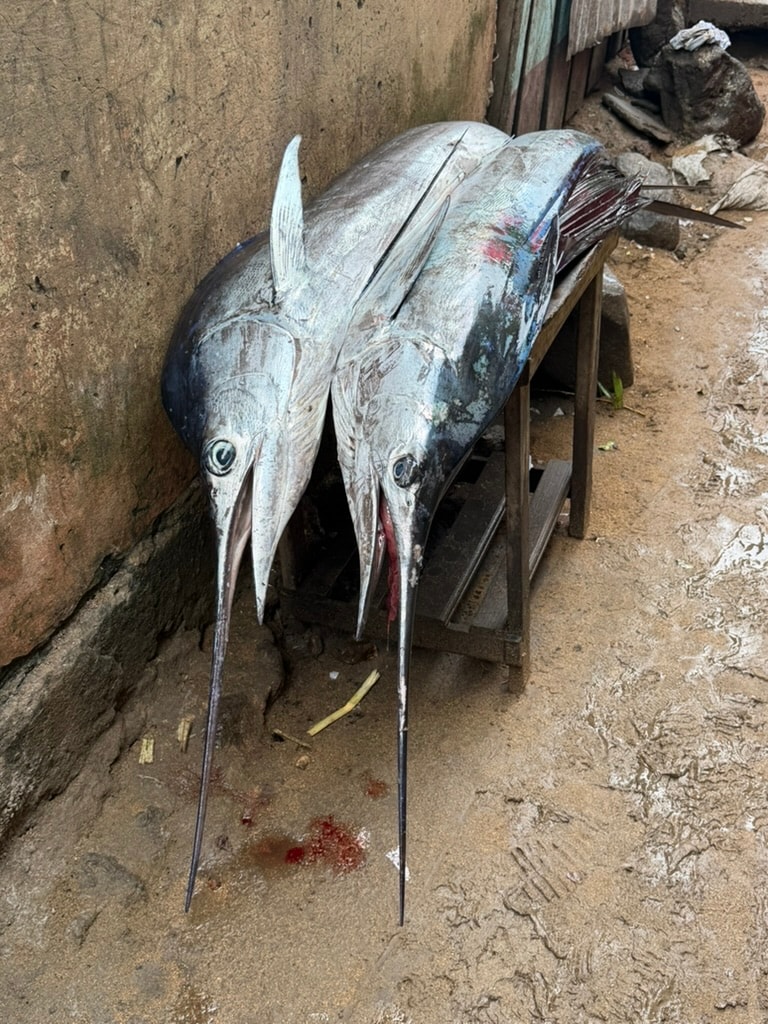
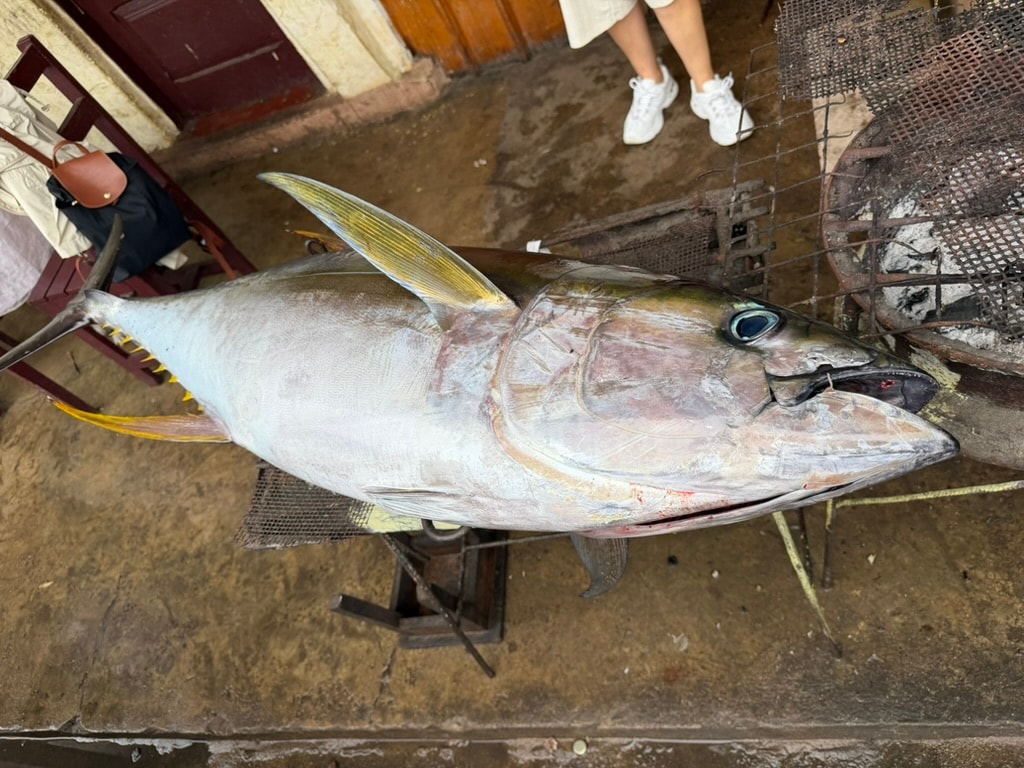
For Santomean fishing families, a catch like this is not a sport - it is a livelihood. A single large yellowfin tuna can represent weeks of income for a local fisherman, sold fresh at the market or direct to restaurants in the capital. Fishing here is small-scale, artisanal, and deeply woven into daily life on the island.
The waters around São Tomé and Príncipe sit within one of the Atlantic's most productive marine zones, rich in yellowfin tuna, wahoo, barracuda, and dorado. That abundance is not guaranteed. Illegal industrial fishing by foreign fleets remains a serious pressure on these waters, and local fishermen - working from small pirogues with limited equipment - cannot compete on scale.
When you fish here with a local operator, you are directly supporting the families who depend on these waters. We work exclusively with Santomean guides and boat owners. Your day on the water keeps money where it belongs.
✦ Plan Your Trip
Ready to fish São Tomé?
Message Jack directly for current catch reports, crew contacts, and advice on planning your trip. Book ahead, stay flexible, and bring everything you need.