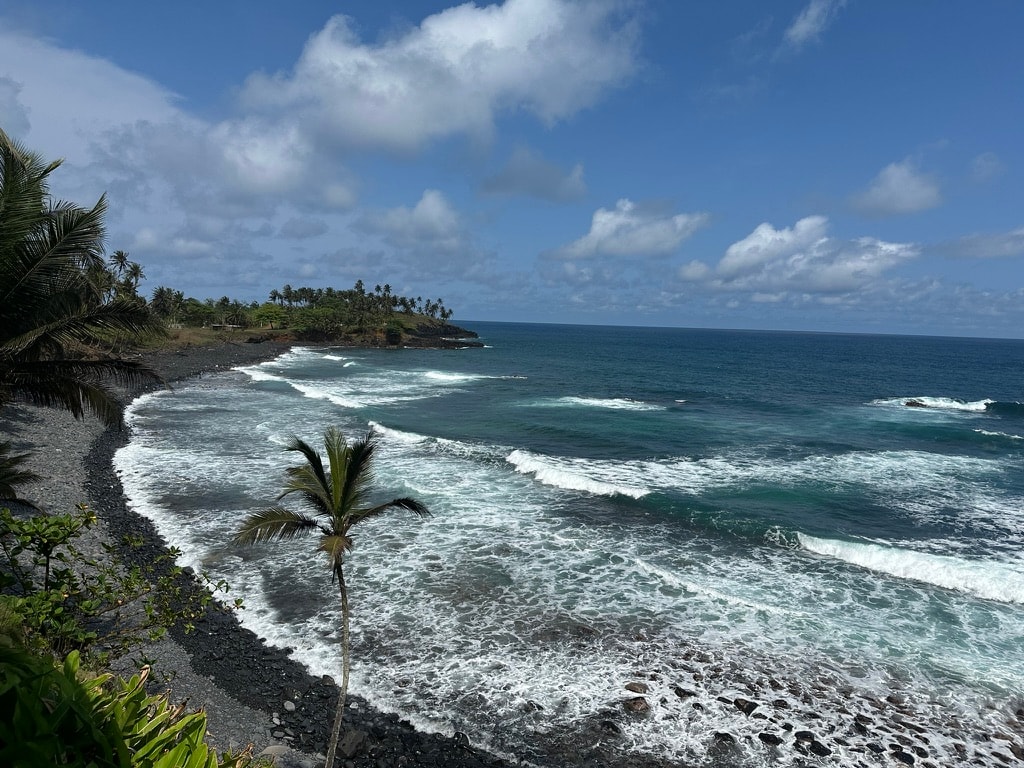
Drive the coastal road to the end
North São Tomé Travel Guide: Neves, Lagoa Azul and the Road to Santa Catarina
North São Tomé travel guide
Big picture and background
The North Coast Corridor
This guide covers the island's northern and north-western coastline, starting just beyond the capital and following the coastal road through working towns, open shoreline, and exposed Atlantic headlands. The north is not remote and it is not a curated destination zone. It is a lived coastal corridor where daily life, fishing, fuel infrastructure, and travel all occupy the same narrow strip of land.
Parts of the north-eastern coast support savanna-type vegetation rather than dense rainforest. This is most visible around Praia das Conchas and Lagoa Azul, where grasses and scattered trees replace the closed canopy found further south and inland. Baobab trees are a defining feature here, particularly around Lagoa Azul, and immediately distinguish the area from the forested interior that dominates much of the island.
Historically, this coastline is where São Tomé's human history begins, with early Portuguese landfall associated with the region and later development of large plantation estates. Today it remains economically important, including a working port town, long-established fishing communities operating directly from the shore, and fuel and gas storage terminals that are critical to island supply. The north is not scenery separated from reality. It is part of how the island functions, and this guide treats it that way.
If you want to explore the north with local knowledge and no logistical headaches, you can view our northern tours or tackle the route independently with our car hire.
The Road North
The EN-1: Getting Started from the Capital
The main road out of the capital heading north is the EN-1, recently rehabilitated with World Bank funding. The stretch from the city to Guadalupe is now in good condition and significantly better than it was even a few years ago. Beyond Guadalupe the road continues to Neves and then on to Santa Catarina, becoming more coastal, more winding and more interesting as it goes.
Allow a full day for the north. There is enough to stop at along the route that rushing it means missing the point. Leave early, particularly if you want Lagoa Azul before anyone else arrives or Santola in Neves for lunch before the crabs run out.
First Stop
Guadalupe: The First Town North, 14km from the Capital
Guadalupe is the first significant town north of the capital, sitting around 14km out. It is a functioning town rather than a tourist stop: local commerce, moto-taxis, daily activity. It marks the point where the EN-1 rehabilitation ends and also sits close to the turn for the interior road toward Monte Café and the central highlands.
Guadalupe is not a destination in itself but it is a useful orientation point. If you are continuing north, you are roughly a third of the way to Neves from here.
Plantation Estate
Roça Agostinho Neto: Plantation History on the North Road
Roça Agostinho Neto is one of the significant plantation estates on the north road. The roça is large, with a main avenue leading to an imposing hospital building that once served the estate and now shelters local families. There is a small museum on site and a botanical garden with plants typical of the island.
This is a place that rewards a slow visit rather than a quick stop. The scale of the original estate and the contrast between its past function and present reality is part of what makes roça visits on São Tomé worthwhile. Do not rush through the avenue and the buildings. Let it land.
Coastal Stop
Praia dos Tamarinhos: A Local Beach Between the Capital and Neves
A coastal stop between the capital and Neves. The beach takes its name from the tamarind trees along the shore. It is a local beach rather than a visitor facility: no infrastructure, no supervision, but the setting is open and the Atlantic views are clear.
Worth a short stop if you are making a day of the north road. Arrive in the morning for the cleanest light and the calmest water.
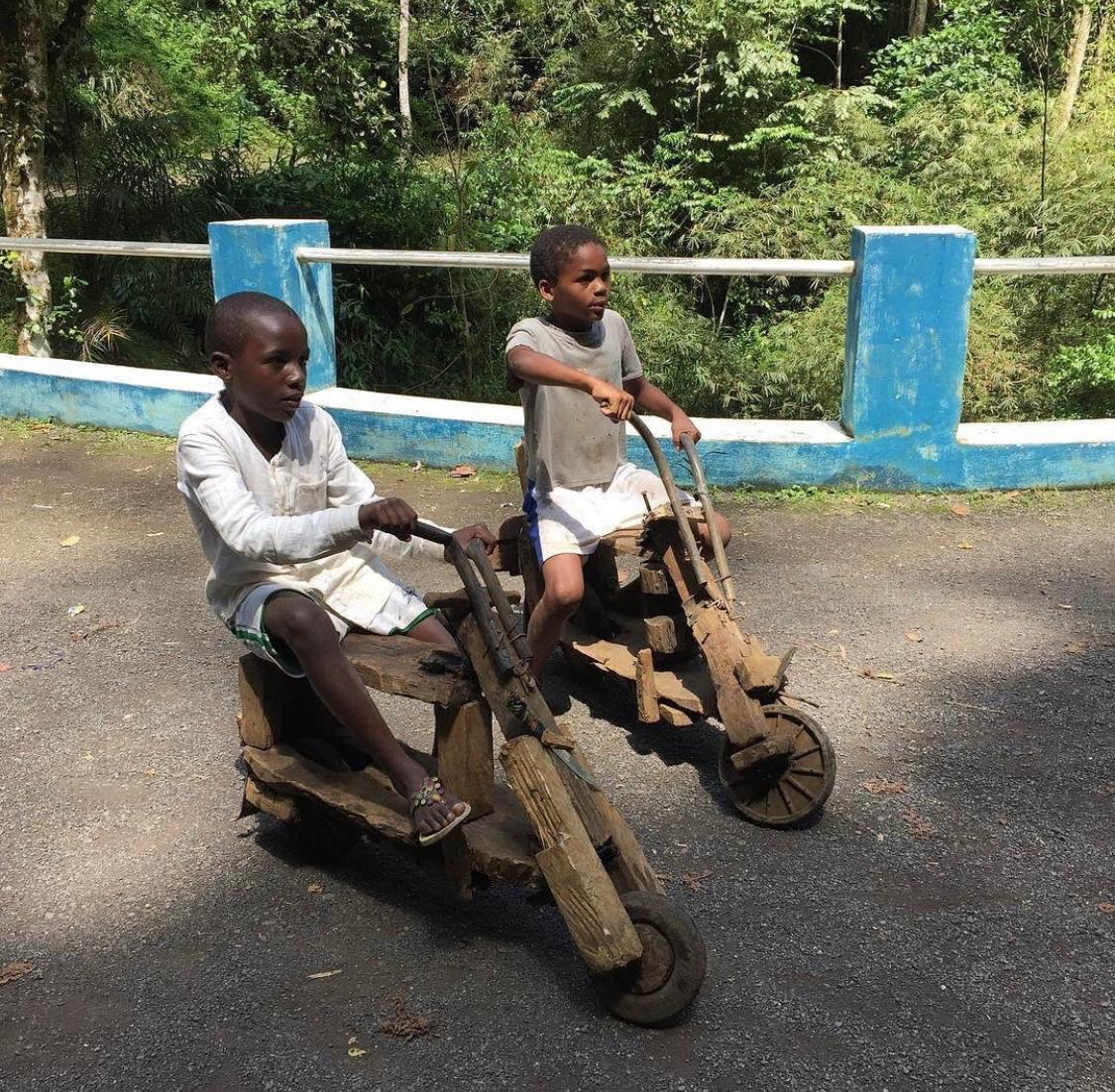
Life on the road north
Swimming and Diving
Lagoa Azul: The North Coast's Most Photographed Spot
Lagoa Azul is the most photographed spot on the north coast. The small bay sits in the northwest, inside the Parque Natural Obô de São Tomé, framed by baobab trees and with a small lighthouse on the headland. The water is clear and blue, the setting is open and photogenic, and the contrast between the rocky shoreline and the Atlantic is immediately striking.
It is a popular stop for swimming and snorkelling and is also the base for several dive sites. Roadside access is simple. There are no facilities worth relying on, so bring water and what you need.
The area around Lagoa Azul has a seahorse sanctuary. Divers regularly see a dozen or more on a single dive here. If you are a diver, this alone justifies the stop. Book a dive through your accommodation in the capital rather than turning up cold.
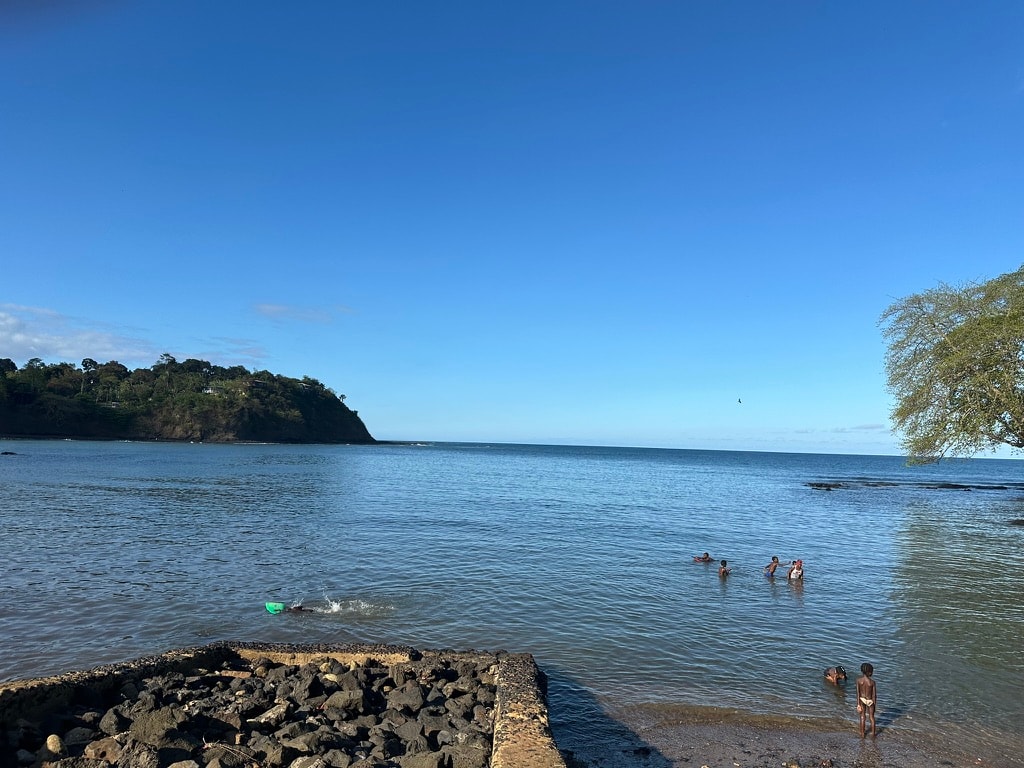
Lagoa Azul, northwest coast
Main Town of the North
Neves: Port Town, Brewery, and the Best Crab Lunch on the Island
Neves is the third largest town in São Tomé and Príncipe and the main town of the north. It sits on the northwest coast around 30km from the capital and is a real working town: port infrastructure, fuel and gas storage terminals that supply the whole island, the Nacional brewery where the local beer is made, fishing activity, daily commerce.
Neves was also a base for Norwegian whaling companies until the late 1950s, with up to 100 whales killed annually in the surrounding waters. That history is largely unmarked but it sits in the background of the town's industrial character.
Santola is probably the most well-known restaurant in the north, serving crab and cold Nacional. It is simple, unpretentious and worth the stop. Do not arrive expecting a polished dining experience. Do arrive hungry. Cash only, and go early if you want the crab.
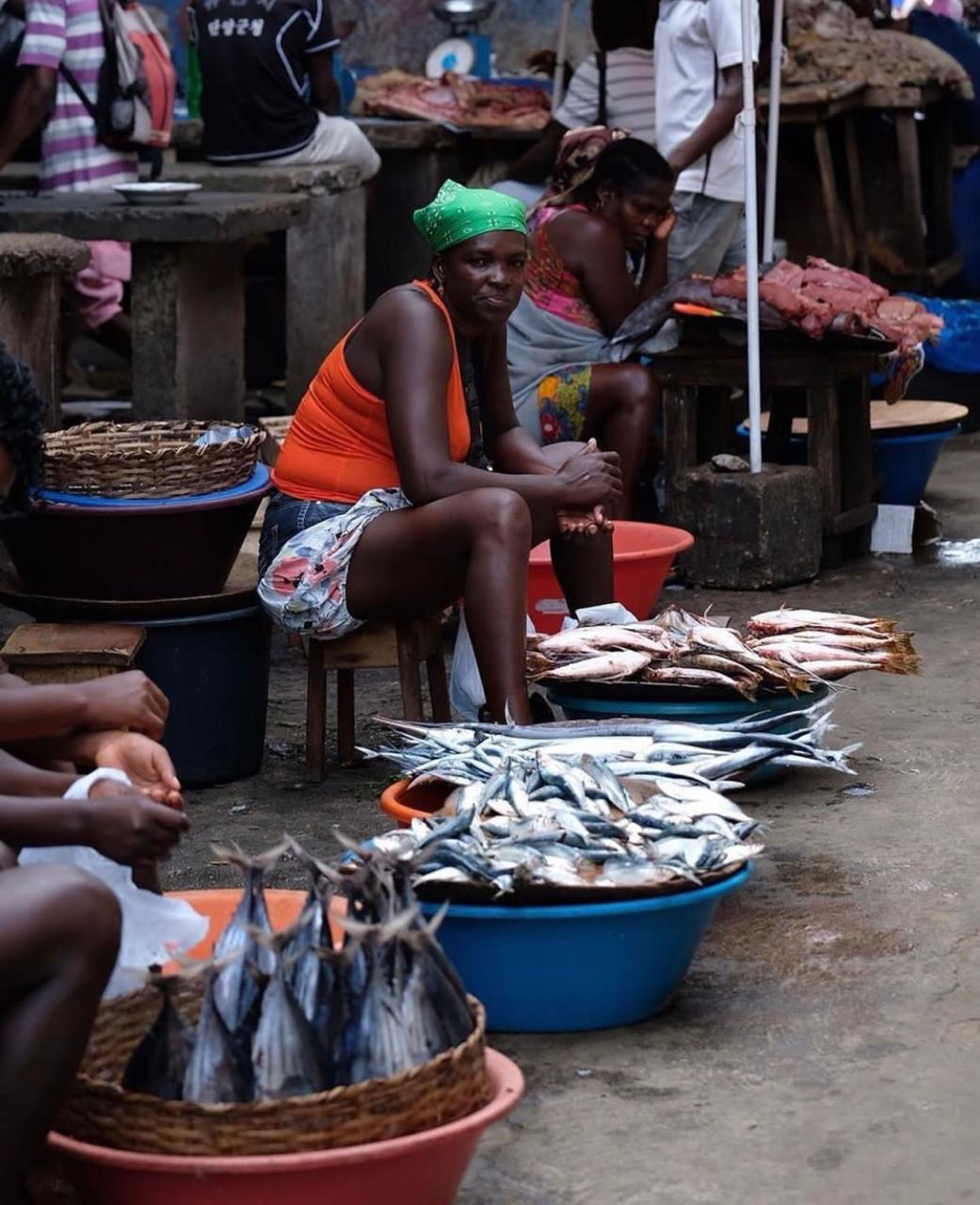
Neves market
Plantation Estate
Roça Diogo Vaz: Cattle, Coast Road, and Plantation Landscape
Roça Diogo Vaz sits further along the north road and is notable for the cattle herd associated with the estate. It is not unusual to find cows occupying the coastal road here, moved by young herders going about their daily work. Slow down and let them pass: this is not a delay, it is part of the road.
The roça buildings and the landscape around it are worth a stop for anyone interested in the plantation history of the island. Like Agostinho Neto, the contrast between the original estate's scale and its present community use is what makes it worth seeing.
Historical Monument
The Padrão dos Descobrimentos: Where São Tomé's History Begins
The monument marking the point where Portuguese navigators first made landfall on São Tomé stands on the north coast. It is a simple but historically significant stop: this is where the island's recorded human history begins.
Worth a photograph and a moment. The setting is understated and the monument itself modest, which somehow makes it feel more honest than a grand memorial would.
Beyond Neves
The Santa Catarina Tunnel: The Only Road Tunnel in São Tomé and Príncipe
Beyond Neves the road winds along the coast toward Santa Catarina, becoming more dramatic as it goes. The Santa Catarina tunnel is the only road tunnel in São Tomé and Príncipe, cut into the rock of the headland. The coastal section approaching it is some of the most striking driving on the island.
When you pass through, expect children selling fruit at the tunnel entrance. This is normal, friendly and part of daily life here. If you want to buy, buy: but not on school days, when children should be in school rather than selling at the roadside.
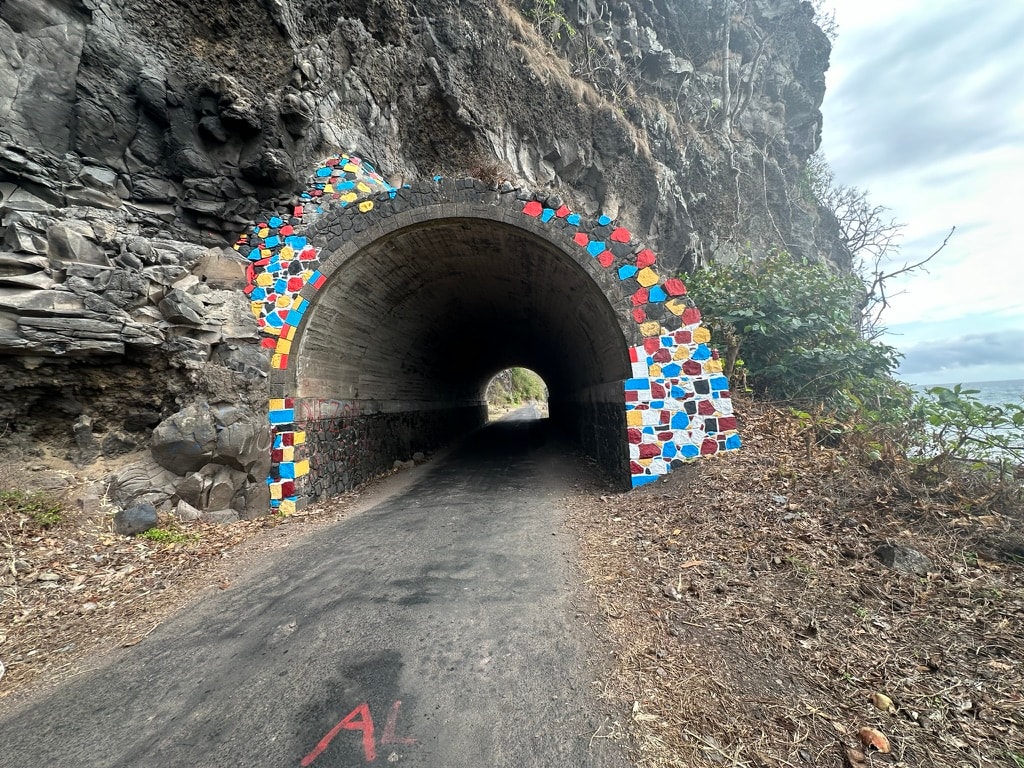
The only road tunnel in São Tomé and Príncipe
End of the Road
Santa Catarina: The Last Fishing Village on the North Road
Santa Catarina is a small fishing village and the last settlement on the north road. Locals still use traditional wooden canoes for fishing. If you arrive in the afternoon you will often see fishermen returning with the catch of the day.
The village is quiet, genuine and completely untouched by tourism infrastructure. It is worth the drive for the sense of how remote and self-contained the far north of the island remains.
Where the Tarmac Ends
The End of the Road and the Start of the Volta à Ilha
Beyond Santa Catarina the road continues briefly as a dirt track before ending at a collapsed bridge. It is simply an abrupt, unfinished end to the road, where the tarmac stops and the jungle takes over. It is worth seeing precisely because it is so matter-of-fact about it.
For visitors with a guide and the right preparation, the collapsed bridge is also the starting point for the Volta à Ilha: a two-day hike that traces the island's remote northeast coast all the way down to Porto Alegre in the south. It is one of São Tomé's most demanding and most rewarding walks. Not something to attempt without an experienced local guide.
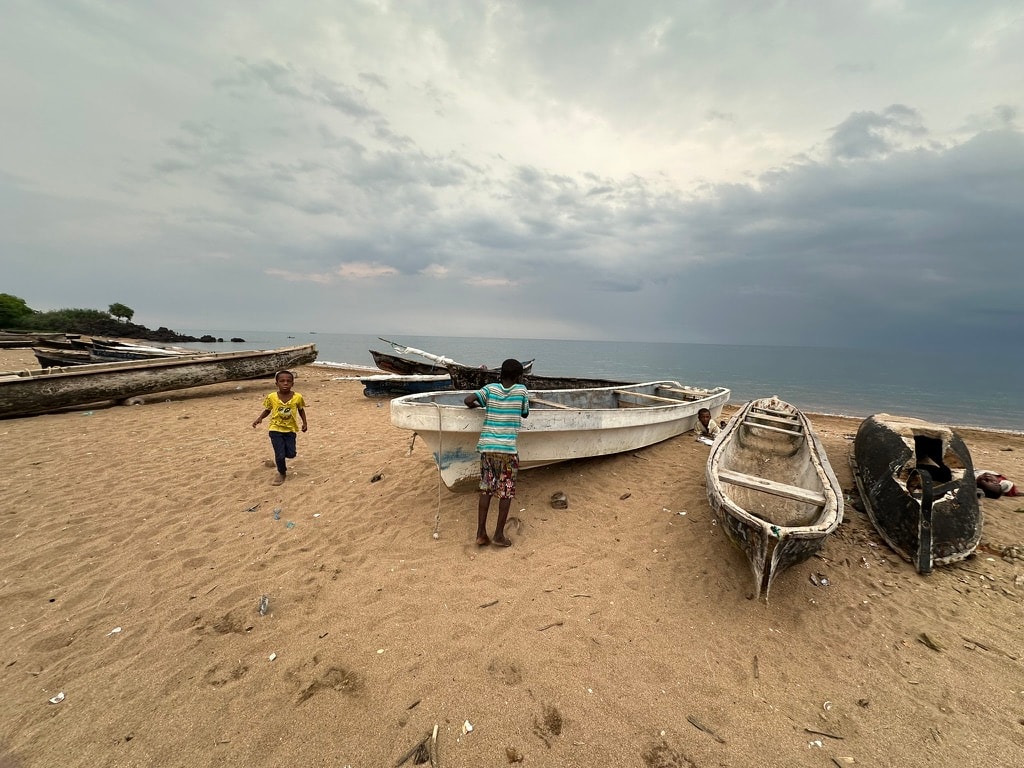
Santa Catarina
Practical Information
Planning the North: Roads, Timing, Food and Where to Stay
The north is straightforward to drive but rewards planning. Here is what to know before you go.
Road conditions
The EN-1 to Guadalupe is in good condition. Beyond Guadalupe toward Neves and Santa Catarina the road is more winding and coastal. A normal car handles the main road comfortably in dry conditions. After heavy rain, the section beyond Neves can be slower and rougher.
Allow a full day
Leave early, take water and food beyond Neves, and do not rush the return in fading light on the coastal sections. The north is not long in distance but it takes time done properly.
Food on the road
Santola in Neves is the main food stop. Simple, cash only, crab and cold Nacional. Beyond Neves there is nothing reliable. Pack water and snacks for Santa Catarina and the end of the road.
Staying in the north
Mucumbli Eco-Lodge is located in Neves along the EN-1, for visitors who want a base in the north rather than the capital. It is the standout option in the area and worth booking ahead.
Get There
Explore the North on Your Own Terms
A reliable car makes the difference between a relaxed day on the north road and a stressful one. Our car hire service gives you a well-maintained vehicle with local knowledge included. Or join one of our guided northern tours and leave the logistics to us.
Closing Thoughts
Why the North Matters
The north of São Tomé is not a polished circuit. It is a working coastline with a colonial past, a functioning present, and a remote northern edge that most visitors never reach. Lagoa Azul gets photographed; Santa Catarina gets forgotten. Both are worth seeing, and the road between them tells you more about how this island actually works than almost anywhere else you will go.